









For bitterly cold, dry weather, the chapka is the warmest option thanks to its ear flaps. For the city, a faux-fur beanie keeps your ears warm without ruining your hairstyle. A beanie is still the simplest and cheapest option, but it flattens your hair. And if your neck gets especially cold or it starts to rain, a down jacket hood that slips over your coat covers your head, the back of your neck, and your throat all at once.
This comparison reviews the four options based on what matters most in winter: warmth, ear protection, hairstyle, rain protection, and style.
The chapka: the warmest option for dry, cold weather
The chapka comes from Russia, where it is called an ouchanka, literally “the hat with ears.” Its flaps can be folded up and fastened on top when the weather is mild, or folded down over the ears and tied under the chin in very cold weather. It is often lined with fur or faux fur.
- Pros: Provides the best protection for your ears and cheeks, effective even in windy conditions.
- Cons: It's bulky, has a distinct "mountain" style, and doesn't pack well in a bag. It flattens the hair on top of the head.
- Who it's for: anyone facing truly dry, cold weather, whether in the mountains or in eastern France.
The beanie: keeps your ears warm without messing up your hair
A toque is a round, brimless hat, often made of fur or faux fur. Popularized in the 1960s, it has a retro, chic style that pairs well with a city coat. It sits on the head rather than hugging it, which helps preserve your hairstyle better than a beanie.
The " Fudoon " quilted beanie (€49) combines both: a waterproof outer layer made of GRS- and OEKO-TEX Standard 100-certified recycled polyester, and a wide, very soft faux fur brim that covers the ears. It comes in cream and black, in one size fits all for head circumferences of 54 to 58 cm, and is machine washable on the cold or 30°C cycle on the delicate setting.

- Pros: elegant, keeps your ears warm, doesn't leave much residue in your hair; the waterproof outer layer protects against light rain.
- Cons: It leaves the back of the neck and throat exposed—you'll need a scarf.
- Who it's for: women who want to keep their hair looking great in the city, from the office to dinner.
The hat: simple and lightweight, but it flattens the hair
The knit hat is the most common type of headwear: it folds up into a pocket and comes in a wide range of prices. How warm it is depends on the material: a wool or merino hat keeps you warm and stays warm even when wet, while an acrylic hat is less warm and causes static in your hair.
- Pros: practical, lightweight, easy to coordinate.
- Cons: It's tight on the head, flattens the hair, and leaves marks; the mesh soaks up water when it rains.
- Who it's for: short trips, sports, and anyone who prioritizes comfort over their hairstyle.
The fourth option: a puffer hood that you can pull over your coat
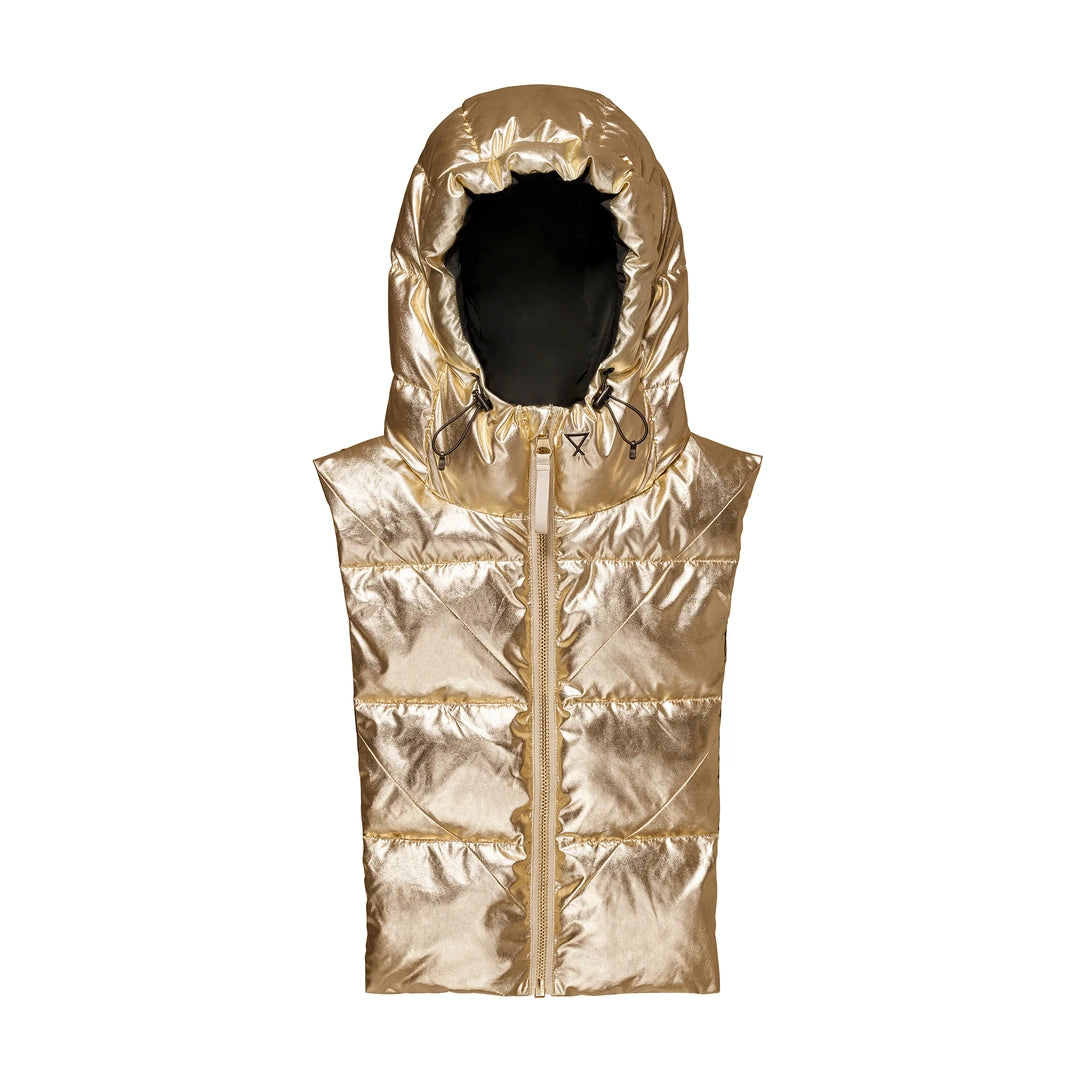
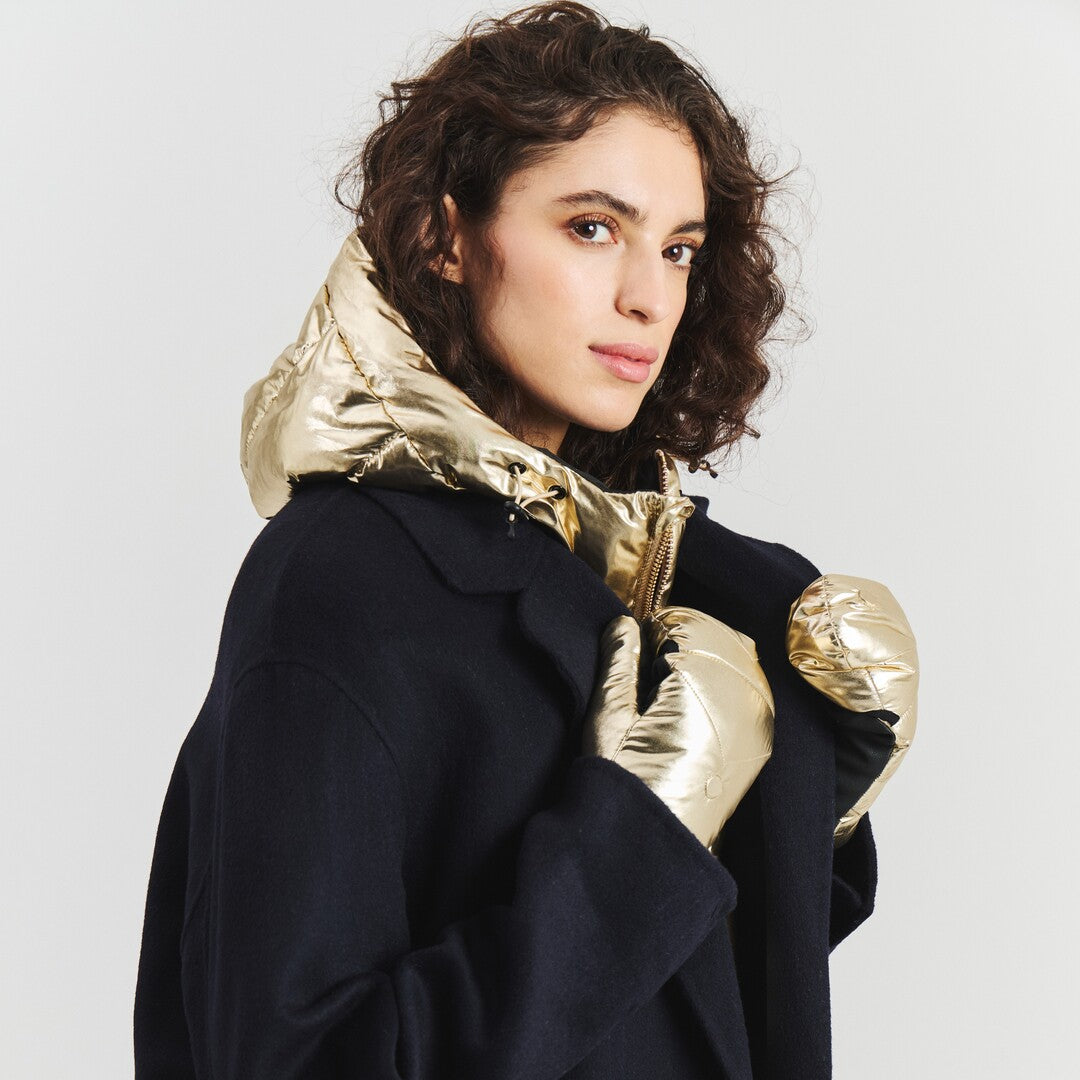
Chapkas, beanies, and hats all have one thing in common: they stop at the head. But it’s often the neck that gets the coldest. The Fudoon down jacket hood slips over any hoodless coat and covers the head, the back of the neck, the throat, and the upper chest—it replaces both a hat and a scarf in a single piece.
It opens completely with a zipper and is pulled over the head without going over the face, which keeps your hairstyle intact. The fabric is water-repellent, made from recycled polyester, and the in Filling s of insulating wadding, with no feathers or down. Most models are reversible, featuring two colors in a single piece, and the sherpa version—warmer and softer—offers comfort similar to that of a chapka. It costs between €89 and €99 and folds up into its built-in pouch.

The Comparison
| Chapka | Chef's Hat | Beanie | Down Jacket Hood Fudoon | |
|---|---|---|---|---|
| Heat | Very high | High on the ears | Medium to high, depending on the mesh size | Tall, including the neck |
| Ears | Covered by the flaps | Covered by the lapel | Blankets | Blankets |
| Neck and Throat | No | No | No | Yes |
| Hairstyle | Compacted on top | Preserved | Tackled | Preserved |
| Rain | Depending on the subject | Waterproof outer layer ( Fudoon) | Absorbs water | Water-repellent fabric |
| Style | Mountain | Retro, chic | Casual | Urban, reversible |
| Fits in a bag | With difficulty | Yes | Yes | Yes, in his little bag |
What Kind of Headwear Should You Wear This Winter?
- Dry cold and strong winds: a chapka, or a sherpa hood if you want to protect your neck as well.
- In the city, at the office, or when going out: a beanie with a scarf, or just the hood of a down jacket.
- Cold rain: the water-repellent down jacket hood; the Fudoon beanie keeps out light rain thanks to its waterproof outer layer.
- Sports and short trips: a wool or merino wool beanie.
Frequently Asked Questions
What is the difference between a chapka and a toque?
The chapka has ear flaps that can be folded up or tied under the chin. The toque is a round hat with no brim or flaps; on the " Fudoon" model, it features a wide faux fur brim that covers the ears.
How can I stay warm without messing up my hair?
Avoid anything that constricts the head, such as a tight-fitting beanie. A beanie sits on top of the head, and a hood with a zipper can be put on without going over the face. Natural fibers and soft linings also help reduce static electricity.
Can you wear a beanie in the rain?
A hat made entirely of fur doesn't do well in the rain. The " Fudoon " hat has a waterproof fabric top that protects against light rain; for a downpour, a water-repellent hood or a rain hood Fudini is a better choice.
How do you care for a faux fur hat?
The " Fudoon " beanie can be machine-washed in cold water or at 30 °C on the delicate cycle with a small amount of mild liquid detergent. Do not tumble dry: let it air dry on a hanger. Dry cleaning is acceptable, provided no trichloroethylene or bleach is used.